
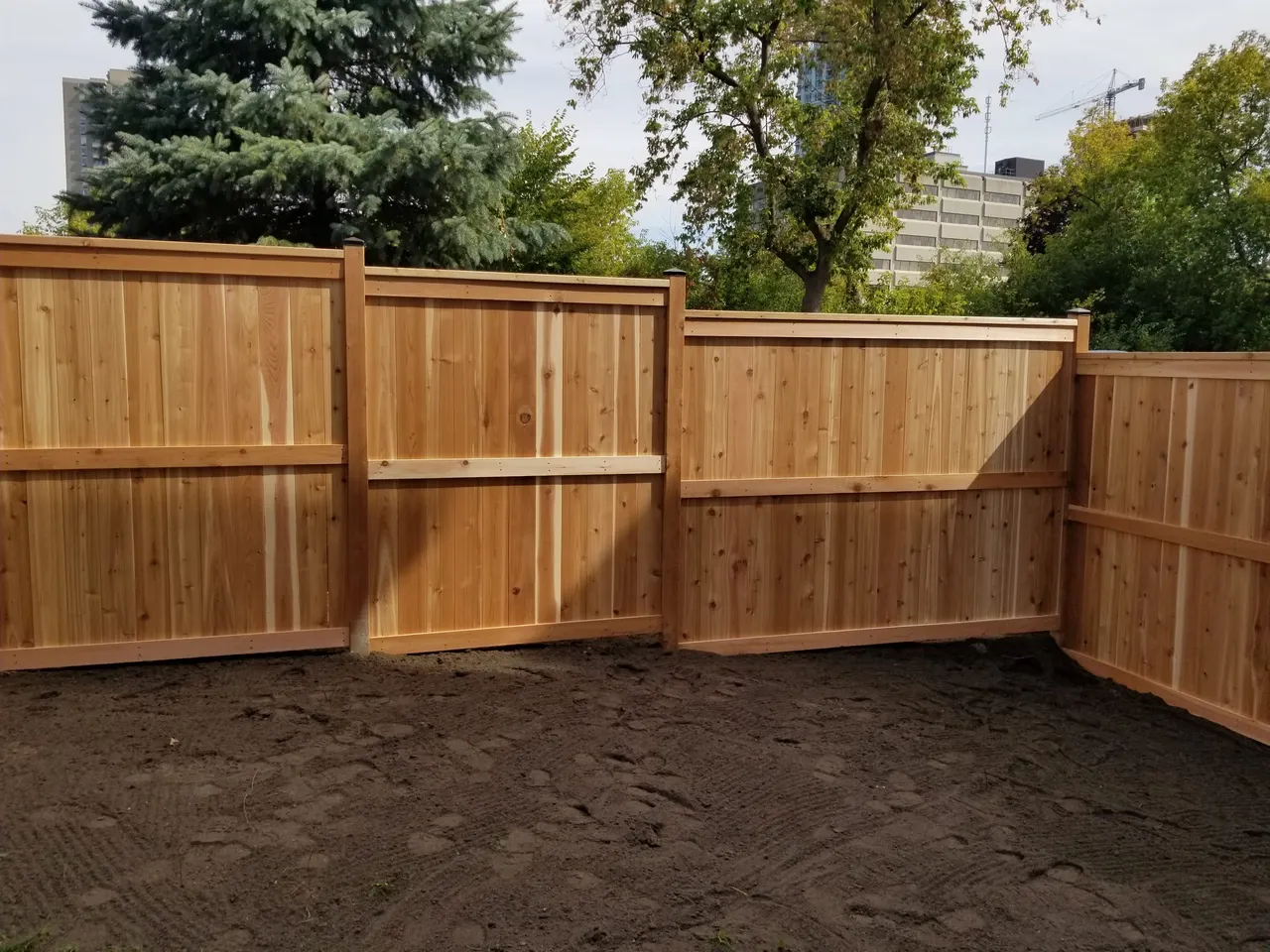
Most of the lawns we are asked to replace in Stittsville and Barrhaven were laid only a few years ago. They looked fine for a season. Then they were soggy every May, brown by July, thin by the third year, and full of weeds by the fourth.
The sod was rarely the problem. New lawns here fail because of what is under them: a few centimetres of topsoil spread over compacted clay at the end of construction, and grading that no longer moves water the way the lot was designed to. Laying new sod on that ground gives you one good summer. Here is what proper sod installation involves, and why fall is one of the best times of year to do it.
Why lawns fail on clay
Much of Stittsville and Barrhaven sits on clay. In a new subdivision, the ground is also compacted by excavators, trucks and years of building, then covered with whatever topsoil the budget allowed.
That combination works against grass in both seasons. In spring, water cannot drain through the compacted layer, so the roots sit in it. In summer, the shallow topsoil dries out fast and the roots never went deep enough to find moisture. The grass thins, weeds move in, and because Ontario bans the sale and use of cosmetic pesticides, a lawn here has to be healthy enough to out-compete them on its own.
Every lawn that lasts starts with fixing that, not with buying better sod.
Start with the grade: what the City allows
Before soil and sod, check where the water goes. The City of Ottawa’s Landscaping Education Guide is direct about it: property grades are designed to move water away from the house, you are not allowed to change the grading of a property in a way that alters approved drainage patterns, and water cannot be directed onto neighbouring properties unless that is part of the approved design.
In practice, a lawn replacement is the right time to restore the grade, not invent a new one. Over the years, low spots form, a downspout erodes a channel, or a patio and garden beds raise one part of the yard. We fill the low spots, re-establish the fall away from the foundation and along the swale between houses, and make sure the new lawn sheds water the way the lot was designed to. If you do not have your lot’s grading plan, the City’s guide explains that you can request it through building permit records or call 3-1-1. The City’s lot grading FAQ covers who is responsible for what.
Soil: the part every quote prices differently
This is the biggest hidden difference between two sod quotes. One removes the old turf, loosens the compacted ground, brings in real topsoil and grades it fine. The other rakes the existing soil flat and lays sod on it.
Done properly, the sequence is:
- Strip the old lawn. Sod laid on top of old grass roots into thatch, not soil, and raises the grade against the house and walkways.
- Loosen the compacted layer and work in organic matter, so water and roots can move down.
- Bring in topsoil to a real depth, not a dusting. Ask for the depth in writing.
- Fine grade to the drainage pattern, smooth and firm, with the finished soil set just below walkways and patio edges so the sod sits flush.
- Roll lightly to firm the surface. A heavy roller compacts the soil you just loosened.
On a Stittsville or Barrhaven lot, that preparation is most of the job. Our softscaping guide goes deeper on building soil that drains under beds and lawn.
The sod itself
Good sod is fresh, uniform and strong. Ontario municipal landscape specifications, like the City of Brampton’s sodding specification, call for No. 1 nursery sod meeting the standards of the Nursery Sod Growers Association of Ontario: mature enough that a piece holds together when lifted by two corners, free of disease and weeds, and laid within 36 hours of being cut. Dry, yellowing or broken rolls get rejected.
We lay fresh-cut Kentucky bluegrass sod the same day it leaves the farm. Bluegrass knits into a dense lawn and recovers well, and it does best with the full sun most new-subdivision backyards get.
Laying it
The same municipal specification describes how it should go down, and it matches how we lay it:
- Not on frozen ground, and not in waterlogged conditions.
- Rows across the slope, joints staggered like brickwork, edges butted tight with no overlaps and no gaps.
- Cut, do not stretch, to fit curves and edges.
- Pegged on steep slopes. On slopes steeper than 3:1, the sod is pegged so it does not slide before it roots.
- Rolled lightly for good contact between the sod and the soil.
- Watered immediately, enough that the moisture reaches the top 100 mm of soil underneath.
Fall or spring?
Ottawa’s two good windows for sod are late April to early June and late August through October.
Fall is often the better of the two. The soil is still warm, which drives root growth, the air is cool, and autumn rain does much of the watering. A lawn laid in September or early October roots in before freeze-up and comes out of the snow established, with a full spring of growth ahead of it before summer heat. Spring sod works well too, but it has only a few weeks to root before July.
Sod laid in summer can survive with heavy, consistent watering through the heat. Sod laid on frozen ground cannot root at all, which is why we stop when the ground starts to freeze.
Watering and the first month
New sod needs more water than people expect at first, then less often than they think.
- First two to three weeks: keep the soil under the sod moist, not just the grass. Brampton’s specification calls for keeping the topsoil under the sod continuously moist to a depth of 75 to 100 mm until it is firmly rooted. Lift a corner to check. In cool fall weather, that is much less watering than in June.
- Once it has rooted (tug a corner; rooted sod resists): water less often and more deeply, so the roots follow the water down.
- Stay off it until it has rooted.
- First mowing: when it has grown past normal height, and never more than a third of the blade at a time.
- Fertilizer: sod laid in the fall waits until the following spring.
If you put in an irrigation system, the City’s guide notes that it has to stay on private property and must not spray onto sidewalks or roads.
Front yards: the rules that apply out front
In front yards there are two more things to know. The City requires that at least 50 per cent of your front yard be soft landscaping, such as lawn, plants and mulch, and artificial turf counts as hard landscaping, not soft. And the grass strip between the sidewalk and the road is City right-of-way. Our guide to front yard landscaping in Barrhaven and Kanata covers those rules and what you can plant there.
Sod and the rest of the yard
A lawn is usually the last thing installed in a project, after patios, walkways and beds. That order matters: sod laid before heavy work gets driven over, and patio edges need to be set before the finished grade around them. If the lawn is part of a bigger project, our guides to landscaping in Stittsville and landscaping in Barrhaven cover planning the whole yard, including mulch and planting beds.
Sod installation in Stittsville and Barrhaven
We strip, regrade, rebuild the soil and lay new sod across Stittsville, Barrhaven and Kanata, as a stand-alone lawn replacement or as part of a larger landscape. The full scope of our landscape work is on our landscaping page.
Book a free on-site estimate. We will look at where your water goes and what is under the existing lawn, and send a written, fixed-price scope with the topsoil depth spelled out.
Published October 11, 2026 by ALM Construction & Landscaping. General information for Ottawa-area homeowners, not a substitute for the City's determination on your specific project.